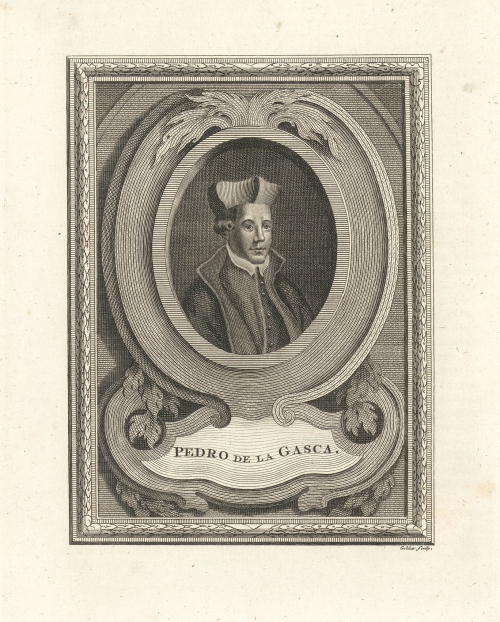
John Goldar (1729–1795) was an 18th-century English printmaker, illustrator, and occasional publisher active in London. Born in Oxford in 1729, Goldar operated principally as an engraver for the London book trade, producing a diverse body of work that encompassed satirical genre scenes, theatrical portraits, historical illustrations, and maritime views. His earliest documented published print appeared in May 1762, titled A View of both Squadrons Lying in Ramsay Bay, engraved after a painting by naval artist Richard Wright of Liverpool. Throughout his career, maritime subjects remained a steady component of his output alongside extensive work in genre painting.
Goldar gained significant recognition for translating contemporary humorous and satirical oil paintings into copperplate line engravings and etchings. His primary collaborator in this genre was John Collet (c. 1725–1780), an artist whose narrative compositions closely imitated the satirical style of William Hogarth. Goldar engraved several popular works after Collet for printsellers Henry Parker, John Wesson, and Robert Sayer, including The Recruiting Sergeant, The Female Bruisers, The Country Choristers, and The Refusal. He also executed the four-plate series Modern Love, first published around 1765–1766 by Thomas Bradford and later reissued in 1782 by John Boydell. In addition to Collet, Goldar produced plates after similar genre painters, including Samuel Hieronymus Grimm, Herbert Pugh, and Philip Dawe. He exhibited his work with the Free Society of Artists and the Incorporated Society of Artists, showing an unfinished proof of an engraving after John Hamilton Mortimer in 1771.
While Goldar made brief attempts to operate as an independent print publisher, issuing a portrait of actor William Powell in 1769, he derived most of his commercial income from executing commission plates for major London booksellers. His work for the publishing trade was extensive, engraving nine theatrical portraits of prominent contemporary actors in character for Thomas Lowndes's The New English Theatre (1777), as well as numerous portrait plates and historical scenes for James Harrison's illustrated edition of Paul de Rapin-Thoyras's The History of England (1784–1789). He also engraved likenesses of notable contemporary figures, including bookseller James Lackington and surgeon Peter Clare. Later in life, Goldar resided in Charlotte Street, Blackfriars Road, Southwark. In 1795, he attempted a return to publishing, issuing a pair of naval prints depicting The Battle of the Saints alongside stipple engravings after Henry Richter. On August 16, 1795, while walking through Hyde Park with his daughter and friends, Goldar died suddenly of an apoplectic stroke.
Bibliography
Clayton, Timothy. "Goldar, John (1729–1795), engraver and printseller." Oxford Dictionary of National Biography. Oxford: Oxford University Press, 2004. https://doi.org/10.1093/ref:odnb/10904.
Redgrave, Samuel. A Dictionary of Artists of the English School: Painters, Sculptors, Architects, Engravers and Ornamentists. London: George Bell and Sons, 1878.
Stephen, Leslie, and Sidney Lee, eds. "Goldar, John." In Dictionary of National Biography, Vol. 22 (Glover – Gravet), 73. London: Smith, Elder & Co., 1890.



 Login / Register
 Basket