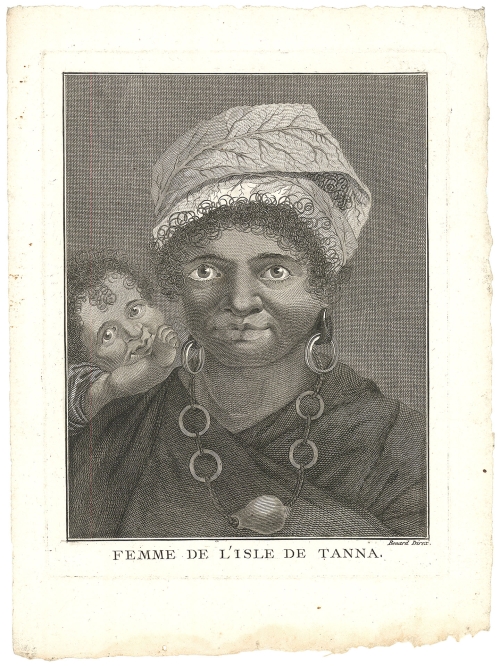
William Hodges was a central figure in 18th-century British art, best known as the official draughtsman on Captain James Cook’s second voyage (1772–1775). Trained in London under the landscape master Richard Wilson, Hodges brought a sophisticated eye to the uncharted territories of the South Pacific. His work during the expedition was revolutionary; rather than adhering to rigid studio traditions, he focused on the atmospheric realities of light and climate. His sketches and paintings of Tahiti, New Zealand, and Vanuatu remain among the most significant visual records of early Pacific exploration.
Beyond the South Seas, Hodges pioneered British artistic interest in India. In 1778, under the patronage of Warren Hastings, he became one of the first professional landscape painters to travel extensively through the subcontinent. This period resulted in the publication of Select Views in India, a series of influential aquatints that introduced European audiences to Indian architecture and topography. His style matured into a bold, painterly approach that prioritized the "mood" of a landscape—a technique that often puzzled contemporary critics but is now recognized as a precursor to the Romantic movement.
Despite his election to the Royal Academy in 1789, Hodges’ final years were marked by professional and financial instability. A 1795 exhibition featuring politically themed works drew the disapproval of the Duke of York, effectively ending his standing in London art circles. He subsequently retired to Devon to pursue a career in banking, but the venture collapsed during the financial crisis of 1797. Hodges died shortly thereafter, leaving a legacy as a master of topographical art whose work bridged the gap between scientific documentation and fine landscape painting.
SHARE



 Login / Register
 Basket