Price: $425.00
SKU: 102466
PUBLISHER: A Paris chez Jaufret au Palais Ehalite No. 61.
MEDIUM: Stipple and line engraving.
DATE: Undated. c.1820.
EDITION SIZE: Oval. Image size 8 1/4 x 6 3/4" (20.9 x 17.4 cm). Plate size , 13 3/4 x 10 1/4"
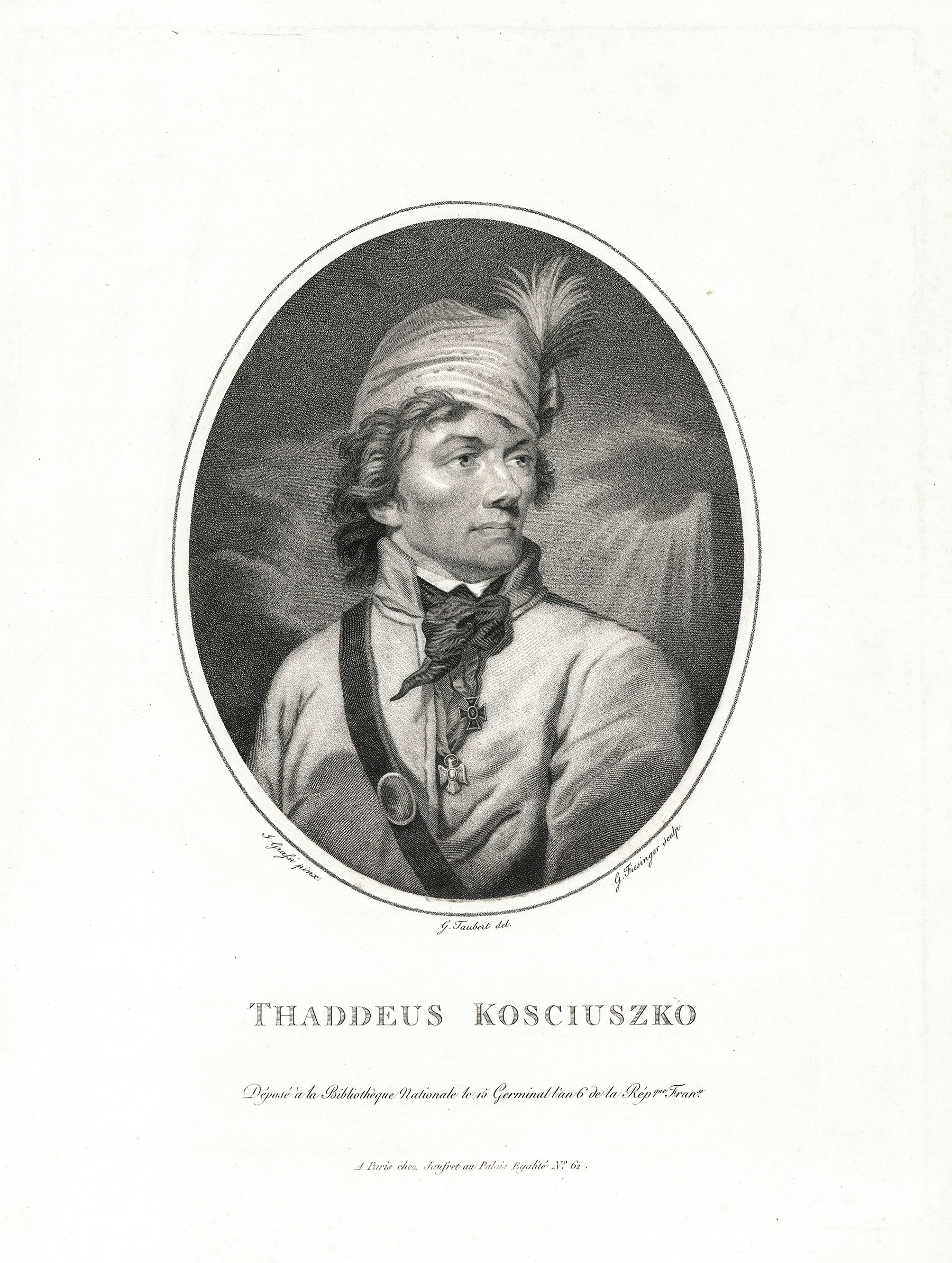
DESCRIPTION: J. Grassi pinx; G. Taubert del; G. Fiesinger Sculp. Depose a la Bibliotheque Nationale… .<br><br> <b>A dramatic bust portrait of the Polish patriot Thaddeus Koociuszko. Shown wearing a feathered cap, the polish Cross of Valor and an Order of the Cincinnati medal.</b> <br><br> Andrzej Tadeusz Bonaventura Koociuszko (1746-1817), a.k.a. Thaddeus Kosciuszko, was a Polish born general, military engineer, and revolutionary. He fought in the American Revolutionary War, as well as an uprising in his home country. He was known for his bravery, kindness, patriotism, likeability, and unwavering strength of character.<br><br> Arriving in Philadelphia in August of 1776, and soon proved his worth by designing blockades and fortresses along the Delaware River, Kosciuszko was given the rank of colonel by Congress in October 1776. In December, he designed Fort Mercer in Red Bank, New Jersey. In the summer of 1777, he ordered the troops retreating from Ticonderoga to delay the British by felling trees and moving boulders onto the path and diverting and damming streams to turn the woodland path into swamps. In the autumn of 1777, Kosciuszko's structures and use of topography contributed to the American victory at Saratoga.<br><br> Reaching Fort West Point in New York in March 1778, Kosciuszko heavily fortified the base along with a section of the Hudson River that it overlooked. It was here that he met Agrippa Hull, a black New-Englander who would accompany Kosciuszko for the rest of the war as his servant, assistant, and companion.<br><br> In the summer of 1780, he traveled south, meeting up with General Horatio Gates. Gates, however, was soon replaced by General Nathanael Greene, whom Kosciuszko would serve for the rest of the war. As the British general Lord Cornwallis chased Greene's forces around the Carolinas, Kosciuszko proved himself invaluable by leading the troops through shortcuts and building a fleet of small boats which could be used to transport supplies and soldiers across rivers.<br><br> In early autumn 1782, he was promoted to field commander. On November 14, Kosciuszko led a skirmish outside Charleston, South Carolina, one of the last military actions of the war. Later in life he became a close friend of Thomas Jefferson.
ADDITIONAL INFO: A very nice example of the rare portrait.
CONDITION: Very good condition.
REFERENCE:



 Login / Register
 Basket